
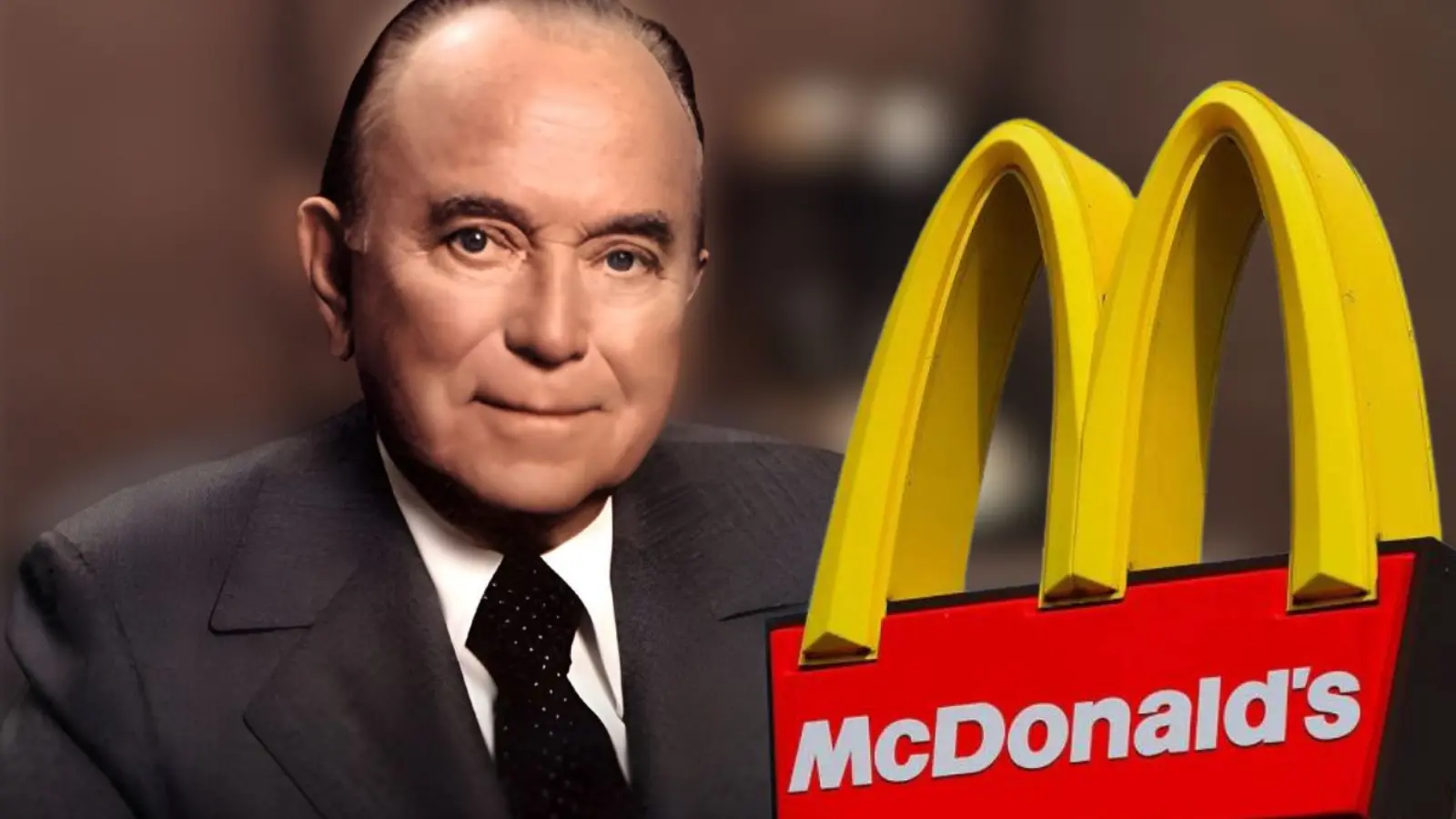
Ray Kroc is best known as the businessman who transformed McDonald’s from a small California hamburger restaurant into a global fast-food empire.
While the McDonald brothers founded the original restaurant, it was Kroc’s strategic vision, franchise model, and real estate approach that turned McDonald’s into a worldwide brand.
This article provides a detailed, fact-based look at Ray Kroc’s net worth, using historical data and verified sources such as Forbes, Bloomberg, and Reuters.
We also explain what net worth is, how Kroc built his wealth, and why his fortune remains relevant globally.
What Is Net Worth?
Net worth is the total value of a person’s assets minus their liabilities.
Assets include:
- Business ownership or shares
- Real estate
- Cash and investments
- Other valuable holdings
Liabilities include:
- Loans
- Debts
- Financial obligations
For entrepreneurs like Kroc, net worth comes mostly from equity ownership and asset appreciation.
⚠️ Note: Net worth estimates fluctuate due to market changes, asset valuations, inflation, and currency conversions.
Ray Kroc’s Estimated Net Worth
At the Time of His Death
Ray Kroc passed away in January 1984. According to historical records, his estimated net worth was $600 million at that time.
Inflation-Adjusted Value (2026 Dollars)
Using U.S. inflation data:
- $600 million in 1984 ≈ $1.7–$1.9 billion in 2026
This provides context for comparing Kroc’s wealth with today’s corporate leaders.
How Ray Kroc Built His Fortune
Ray Kroc’s wealth came from several strategic moves:
1. Franchise Expansion
Kroc joined McDonald’s in 1954 as a franchise agent. Instead of focusing on one restaurant, he expanded rapidly through a franchise model, ensuring:
- Standardized food preparation
- Uniform restaurant design
- Consistent supplier systems
- Employee training programs
By the 1960s, McDonald’s was expanding across the U.S. at a remarkable pace.
2. Buying the McDonald’s Brand
In 1961, Kroc purchased full rights to McDonald’s from Richard and Maurice McDonald for $2.7 million. This deal gave him:
- Complete control of branding
- Ownership of the expansion strategy
- Long-term equity benefits
This acquisition is one of the most influential deals in fast-food history.
3. Real Estate Strategy
Kroc partnered with Harry J. Sonneborn to implement a revolutionary real estate approach:
- McDonald’s purchased the land for franchises
- Built the restaurants
- Leased the properties to franchisees
This model generated rent income, franchise fees, and revenue sharing, making McDonald’s a powerful real estate and restaurant empire.
McDonald’s Growth Under Kroc
| Year | Milestone | Impact on Wealth |
|---|---|---|
| 1955 | First franchise opened | Expansion begins |
| 1961 | Kroc buys full rights | Complete equity control |
| 1965 | McDonald’s IPO | Massive valuation growth |
| 1970s | International expansion | Global revenue streams |
| 1984 | Over 7,500 restaurants worldwide | Corporate dominance |
The IPO Effect
McDonald’s went public in 1965 at $22 per share. Kroc’s substantial equity stake increased in value as the stock price grew and dividends were paid, further boosting his net worth.
Why Ray Kroc’s Wealth Grew
Several factors contributed to the growth of Kroc’s fortune:
- Stock appreciation: McDonald’s revenue and profits increased, raising stock value.
- Global expansion: International outlets created diversified income.
- Brand recognition: McDonald’s became one of the most recognized brands worldwide.
- Real estate holdings: Property ownership added stable, appreciating assets.
Why Net Worth Estimates Fluctuate
Even historical estimates vary because of:
- Stock market changes
- Asset revaluation
- Inflation adjustments
- Estate distributions
- Currency comparisons
Figures are approximate, not exact.
Global Economic Impact
Ray Kroc’s wealth isn’t just personal — it has global significance.
1. Shaping the Fast-Food Industry
Kroc’s franchise model influenced global food service, supply chains, and operational standards.
2. Franchise Economics
He demonstrated that:
- Franchises could scale internationally
- Brand control was critical
- Real estate ownership adds financial stability
3. Employment and GDP
Today, McDonald’s operates in 100+ countries, employs hundreds of thousands, and serves millions of customers daily, continuing the economic footprint Kroc helped create.
Comparison With Modern Fast-Food Leaders
| Name | Net Worth | Source of Wealth |
|---|---|---|
| Ray Kroc (1984) | ~$600M (~$1.8B adjusted) | McDonald’s equity |
| Modern McDonald’s CEO | Varies | Salary + stock |
| Other fast-food founders | Multi-billion | Equity ownership |
Kroc may not have been a tech-era billionaire, but in his time, he ranked among the most successful corporate builders in America.
Philanthropy and Estate
Before his death, Ray Kroc donated to:
- Medical research
- Educational institutions
- Charitable causes
His estate continued supporting philanthropic projects, particularly in health and education.
5 FAQ About Ray Kroc’s Net Worth
1. What was Ray Kroc’s net worth when he died?
Approximately $600 million in 1984 (~$1.7–$1.9B today).
2. Was Ray Kroc a billionaire?
Not in 1984 nominal dollars, but inflation-adjusted, his wealth approaches billionaire status.
3. How did he make his money?
Through McDonald’s franchises, stock, real estate holdings, and long-term equity appreciation.
4. Did Ray Kroc found McDonald’s?
No. The McDonald brothers founded it; Kroc expanded and bought the company rights.
5. Why is his net worth still discussed today?
His wealth symbolizes one of the most successful franchise and business expansions in history.
Key Takeaways
- Ray Kroc’s 1984 net worth: ~$600 million (~$1.8B adjusted).
- Wealth came from McDonald’s equity, real estate, and franchises.
- The 1965 IPO accelerated his fortune.
- He reshaped franchising, fast food, and global business.
- His financial legacy continues through McDonald’s global presence.
Ray Kroc didn’t just accumulate wealth — he built a business model that shaped consumer culture worldwide.
